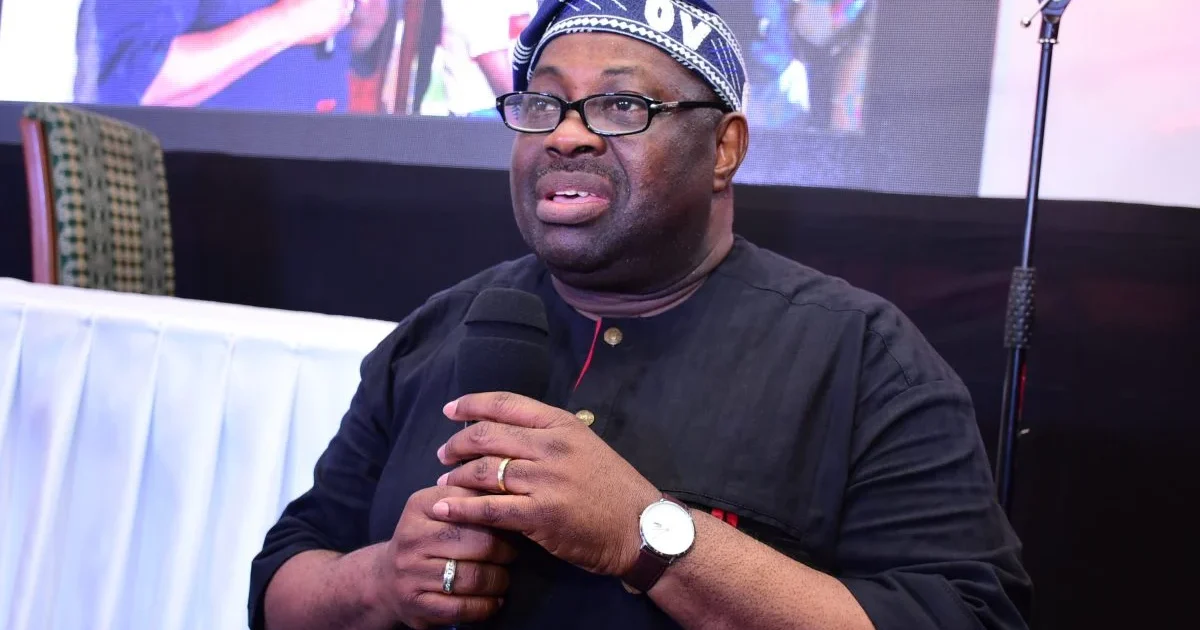
Chieftain of the African Democratic Congress (ADC), Dele Momodu, has argued that former Vice-President Atiku Abubakar has greater national political experience than President Bola Tinubu and former Anambra State governor Peter Obi ahead of the 2027 presidential election.
Momodu made the assertion during an interview with Eagle 102.5 FM in Ilese-Ijebu, Ogun State, on Wednesday, October 21, 2026, as political debate intensifies over the experience and records of the leading figures expected to feature in the next presidential contest.
According to Momodu, Tinubu’s political experience before becoming president was largely concentrated in Lagos State, where he served as governor from 1999 to 2007.
He argued that governing a state, regardless of its economic importance, does not necessarily provide the same experience as managing the affairs of the federal government.
“What I’m trying to say is that Tinubu’s experience was limited to Lagos, and that is why when he became president, he thought Nigeria was Lagos,” Momodu said during the interview.
The ADC chieftain maintained that Atiku’s experience at the federal level gave the former vice-president an advantage in understanding the complexities of national governance.
Atiku served as vice-president under former President Olusegun Obasanjo between 1999 and 2007, a period during which the administration implemented several economic and institutional reforms.
Momodu also referenced Atiku’s involvement in Nigerian politics dating back to the early 1990s, arguing that his participation in successive political contests demonstrated a long history of engagement with national affairs.
He contrasted Atiku’s federal experience with Obi’s tenure as governor of Anambra State, suggesting that the former vice-president had operated at a broader level of government.
The comments reflect one of the central arguments likely to feature in the 2027 campaign: whether previous experience in national government offers a stronger basis for the presidency than experience in state administration, business or other areas of public life.
However, political experience is only one consideration in evaluating presidential candidates. Voters may also assess policy proposals, economic management, security, public accountability, leadership style and the ability to respond to the country’s challenges.
Momodu’s remarks represent his personal assessment of the candidates and do not, by themselves, establish who would be best suited to lead Nigeria.
With the 2027 election approaching, comparisons among the candidates are expected to intensify as political parties seek to define their strengths and challenge the records of their opponents.