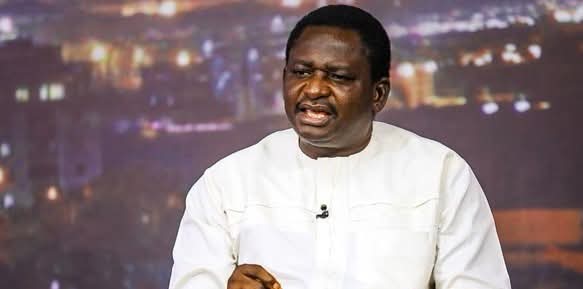
Former Special Adviser on Media and Publicity to late President Muhammadu Buhari, Femi Adesina, has lamented Nigeria’s inability to realise its enormous potential, blaming decades of poor leadership, corruption, weak infrastructure and unemployment for the country’s socio-economic challenges.
Former presidential spokesman Femi Adesina has said Nigeria possesses all the resources needed to become one of the world’s most prosperous nations but has remained held back by poor leadership and corruption. He made the remarks while delivering a lecture titled “Nigeria’s Kinetics: How Long?” at the maiden annual public lecture organised by the Foursquare Gospel Church, Aba Ibeji, in Ibadan, Oyo State.
According to Adesina, Nigeria is richly endowed with abundant natural resources, a youthful population, fertile agricultural land and a strategic geographical location capable of driving sustainable economic growth.
Despite these advantages, he said the country has failed to translate its enormous potential into widespread prosperity because of years of weak governance, corruption, inadequate infrastructure and rising unemployment.
“Nigeria has everything needed to move forward, including a large youthful population, rich natural resources, fertile land and a good geographical location,” Adesina said, adding that these advantages have not been converted into national wealth.
During the lecture, Adesina reflected on statements made by successive Nigerian leaders—from the country’s First Prime Minister, Sir Abubakar Tafawa Balewa, to President Bola Tinubu—who had all spoken about Nigeria’s immense promise and bright future.
He argued that while successive administrations have consistently acknowledged the country’s vast potential, many of those aspirations remain unrealised because governance has not matched the nation’s opportunities.
Adesina urged current and future leaders to move beyond political rhetoric by implementing policies that directly improve citizens’ lives.
He stressed that addressing corruption, improving infrastructure, creating jobs and strengthening public institutions remain essential if Nigeria is to fully harness its human and natural resources for national development.
Adesina’s remarks have added to the ongoing national conversation on governance and economic development, with many stakeholders continuing to call for reforms capable of unlocking Nigeria’s vast potential. He maintained that the country’s future depends largely on leadership that prioritises accountability, integrity and effective service delivery.