The African Democratic Congress (ADC) has shed light on its strategy during the Osun State governorship election, with National Publicity Secretary Bolaji Abdullahi saying the party worked tactically with the Accord Party to prevent an All Progressives Congress victory.
The disclosure offers an insight into the opposition calculations behind the election and highlights the growing importance of tactical alliances in Nigeria’s increasingly fragmented political landscape.
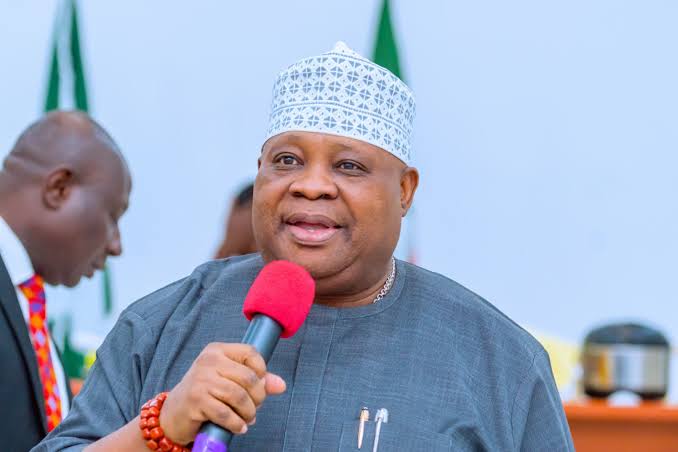
Governor Ademola Adeleke contested the election under the Accord platform after emerging as the party’s candidate. His candidacy had earlier survived a major legal challenge after a Federal High Court judgment ordered the deregistration of Accord and several other parties.
The Court of Appeal subsequently overturned that judgment, restoring the affected parties and removing a major obstacle to the opposition’s participation in the election.
ADC’s position is significant because the party itself was not simply operating as an isolated competitor.
According to Abdullahi, its strategy involved working with Accord in a manner designed to prevent the APC from taking the governorship.
That suggests that the election should not be viewed solely through the traditional lens of one party defeating another.
Instead, the contest also reflected calculations among opposition parties about which candidate had the strongest chance of stopping the APC.
The strategy is particularly noteworthy against the backdrop of the political realignment that has taken place in Osun.
Adeleke’s move to Accord transformed the electoral contest, while the ADC emerged as another opposition force seeking relevance ahead of the 2027 general elections.
Before the election, Adeleke’s campaign repeatedly emphasised the importance of voter support over the deployment of political heavyweights by the APC.
The ADC disclosure provides another dimension to that argument.
Rather than relying only on the strength of one party’s machinery, opposition actors appear to have recognised that tactical coordination could affect the final distribution of votes.
For the APC, the development could offer an explanation for why the opposition vote did not unfold along straightforward party lines.
For ADC, however, the strategy also raises a bigger question: whether tactical alliances can eventually evolve into a more durable opposition coalition ahead of 2027.
The party has already positioned itself as one of the central opposition platforms in the emerging 2027 political landscape. Its earlier legal battle over deregistration, which was eventually overturned by the Court of Appeal, underscored the importance of its survival as a political platform.
Abdullahi’s comments therefore go beyond the Osun election.
They provide a glimpse into how opposition parties could approach future elections — not necessarily by winning every contest individually, but by identifying where cooperation can prevent the ruling party from dominating.
Whether such arrangements can survive beyond a single election remains another question.