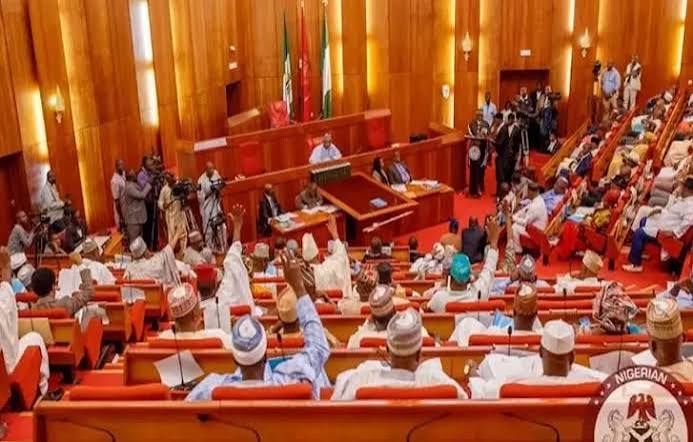
The Nigerian Senate has clarified that the prohibition of preaching and hawking inside commercial buses is not a new law, stating that the provision has existed since the Federal Road Safety Commission (FRSC) Act of 2007 and was only renumbered in the ongoing amendment.
The Senate has responded to widespread public criticism over reports suggesting it recently introduced a ban on preaching and hawking in commercial vehicles.
In a statement issued by the Office of the Senate Leader, the upper chamber explained that the controversial provision did not originate from the current amendment to the FRSC Act but has been part of Nigeria’s road traffic laws for nearly two decades.
Existing Law, Not a New Ban
According to the Senate, the offences are already provided for under:
- Section 10(4) of the FRSC (Establishment) Act, 2007
- Regulation 220 of the National Road Traffic Regulations, 2012
Lawmakers stressed that the ongoing amendment merely renumbered the provision from Item 36 to Item 49 in the Second Schedule of the Act and did not create a fresh offence.
No Ban on Street Preaching
The Senate also dismissed claims circulating on social media that it had outlawed public evangelism or street preaching.
It clarified that the provision applies only to preaching and hawking inside commercial vehicles, where such activities may distract drivers and endanger passengers.
According to the Senate, the objective of the law is road safety—not the restriction of religious freedom.
Amendment Process Still Ongoing
The upper chamber further noted that the amendment bill has not yet completed the legislative process, encouraging religious bodies, civil society groups and other stakeholders to channel their concerns through the appropriate legislative process before its conclusion.