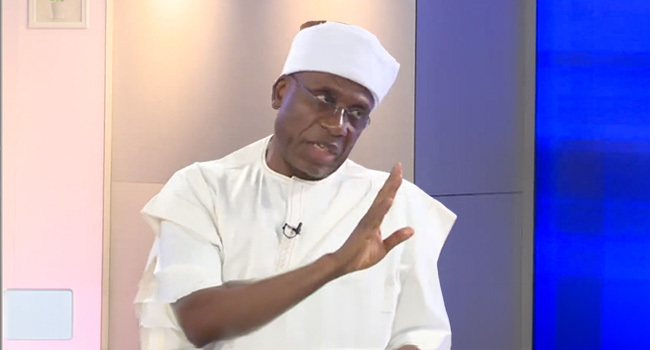

Former Rivers State governor and African Democratic Congress (ADC) vice-presidential candidate Rotimi Amaechi has challenged President Bola Tinubu’s administration over the cost of living, saying he would campaign for the president if petrol prices fell to ₦600 per litre.
Amaechi made the statement during an appearance on Channels Television’s Politics Today on Friday, October 2, while criticising the economic pressures facing Nigerians following the removal of the petrol subsidy.
He argued that the government had not sufficiently cushioned households against the effects of its economic policies, particularly the rising cost of transportation and other essential expenses.
Amaechi said he would personally visit a petrol station to check the price.
“Don’t bother about my views, I will go tomorrow morning to a petrol station myself so that you can see. If fuel has come down to 600 I will campaign for President Tinubu,” he said.
Amaechi questions the impact of economic reforms
The former governor’s challenge centres on the relationship between petrol prices and the broader cost of living.
Since the removal of the petrol subsidy in May 2023, fuel prices have been affected by changes in crude oil prices, exchange rates, supply costs and domestic market conditions.
Higher petrol costs have also contributed to increased transportation and distribution expenses, placing pressure on households and businesses.
Amaechi argued that the administration should demonstrate measurable improvements in living conditions rather than rely solely on explanations of the long-term objectives of its reforms.
A political challenge tied to a specific price
Amaechi’s ₦600-per-litre statement was framed as a conditional political pledge. It does not establish that petrol prices had fallen to that level nationwide or that a reduction would necessarily produce lower prices across the economy.
Petrol prices can differ between locations and marketers. A proper assessment of any price change would require checking actual pump prices across relevant locations and dates.
The challenge also comes amid a wider political contest in which opposition figures have made the cost of living a central issue in their criticism of Tinubu’s administration.
Fuel affordability remains a major public concern
For many Nigerians, petrol prices affect commuting, commercial transport, food distribution, manufacturing and the cost of delivering services.
The debate therefore extends beyond the price displayed at filling stations to whether the broader economic programme can improve purchasing power and reduce the cost of essential goods.
Amaechi’s remarks add to pressure on the administration to demonstrate how its policies will translate into more affordable living conditions. Any assessment of the claim will depend on verified market prices and wider economic indicators.