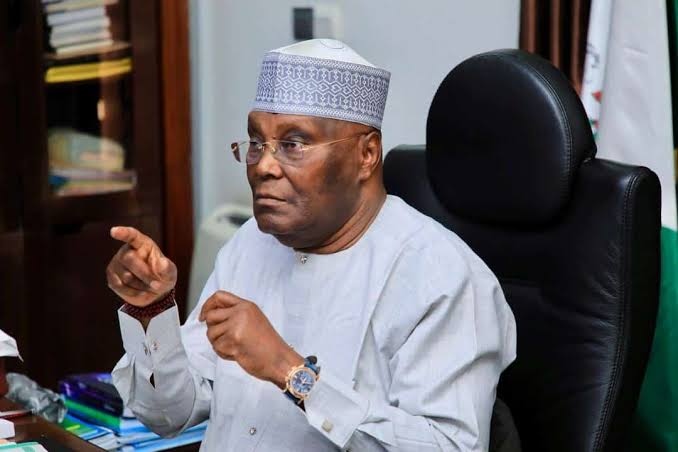
Former Vice-President Atiku Abubakar has challenged President Bola Ahmed Tinubu’s administration to explain the reported plan to seek a loan of up to $20 billion linked to the Lagos–Calabar Coastal Highway, demanding full disclosure of the project’s financial commitments, revised route and contractual arrangements.
Atiku, through a statement issued by Phrank Shaibu, Director of Strategic Communication of the African Democratic Congress (ADC) Presidential Campaign Council, questioned the reported rerouting of sections of the highway and called for transparency over the potential borrowing.
The former vice-president also alleged that some members of the National Assembly were being pressured to approve the proposed loan, warning that Nigerians should not be saddled with additional debt without clear explanations of its purpose and terms.
However, the claims concerning the proposed borrowing and alleged pressure on lawmakers remain allegations made by Atiku. Their accuracy and the status of any loan proposal would require confirmation from the Federal Government and the National Assembly.
Atiku demands disclosure of project documents
Atiku urged the Minister of Works, David Umahi, to publish the original and revised route maps, feasibility studies, environmental assessments, engineering designs and relevant contract documents.
He argued that any significant alteration to a major infrastructure project should be accompanied by a detailed explanation of the technical considerations behind the change and its implications for the overall cost and delivery schedule.
He also called for the disclosure of contract variations, payment certificates, procurement approvals and the amount already committed to the project.
According to Atiku, Nigerians deserve to know whether the reported loan would finance new construction, revised sections of the highway or outstanding contractual obligations.
He further urged the National Assembly to scrutinise any borrowing proposal through a transparent process, including a public hearing where necessary.
Debate over borrowing and accountability
The controversy comes amid wider debate over public borrowing, infrastructure financing and the management of Nigeria’s national debt.
Large infrastructure projects can require substantial long-term financing, but questions about project scope, procurement, cost variations and repayment obligations remain central to public accountability.
Atiku argued that the government must provide verifiable financial and technical information before seeking approval for additional borrowing.
The Federal Government’s response to the specific allegations, including whether a $20 billion loan request is being prepared, will be important in determining the status of the reported proposal.