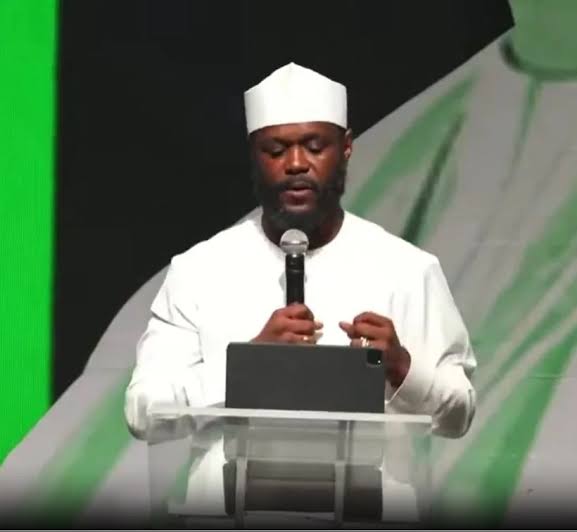
Seyi Tinubu, son of President Bola Ahmed Tinubu, has defended the Federal Government’s economic reform agenda, arguing that the difficult decisions taken by his father’s administration are intended to address longstanding national challenges and create better opportunities for future generations.
Seyi made the remarks on Monday at the inaugural edition of the Seyi Tinubu Colloquium, held at Eko Hotel and Suites in Lagos under the theme, “Shaping the Future Together.”
Addressing participants at the event, he said the administration had chosen to confront inherited economic difficulties rather than postpone difficult decisions at the expense of younger Nigerians.
“President Bola Ahmed Tinubu did not choose Nigeria, did not choose the Nigeria inherited from his predecessors, yet his administration chose to confront the challenges of our nation, not for itself alone, but for the benefit of those who come next, for us, the young generation,” he said.
Subsidy removal and economic restructuring
Seyi identified petrol subsidy removal, foreign exchange reforms and changes to the tax system as major policy decisions intended to reshape the Nigerian economy.
He acknowledged, however, that the measures had imposed significant pressure on households, particularly families already struggling with rising living costs and limited purchasing power.
The admission reflects one of the central debates surrounding the administration’s economic programme: whether the long-term benefits anticipated from its reforms will outweigh the immediate financial strain experienced by millions of Nigerians.
Supporters of the reforms argue that restructuring public spending and addressing distortions in the economy are necessary for sustainable growth. Critics, meanwhile, have called for stronger social protection, improved wages and more effective measures to reduce the cost of living.
Call for greater youth participation
Seyi argued that investments in infrastructure, electricity, agriculture, manufacturing and other productive sectors could help expand economic activity and generate employment opportunities.
He also urged young Nigerians to take a more active role in governance, enterprise and national decision-making, stressing that the policies and choices of current leaders would influence opportunities available to future generations.
The colloquium brought together political leaders, business executives, policymakers and youth advocates to discuss leadership, enterprise and Nigeria’s development prospects.
Ultimately, the administration’s reform agenda will be judged not only by its stated objectives but also by measurable improvements in employment, household incomes, access to essential services and the overall standard of living.