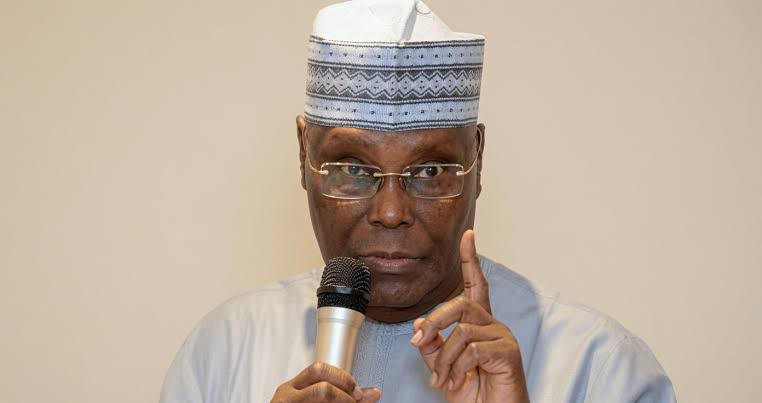
Former Vice President and African Democratic Congress (ADC) presidential candidate Atiku Abubakar has insisted that he will not back down from his proposal to introduce a targeted fuel subsidy if elected president in 2027.
Atiku made the position clear amid renewed criticism from the Tinubu administration and other political actors over his proposal to intervene in petrol pricing.
The former vice president has repeatedly stressed that his proposal is not a return to Nigeria’s previous open-ended import subsidy regime.
Instead, he is proposing what he describes as a targeted, capped, transparently budgeted and independently audited production subsidy designed to reduce energy costs while supporting domestic refining.
In his latest statement, Atiku argued that government intervention should not be considered unacceptable when it is aimed at protecting ordinary Nigerians while similar incentives are being provided to businesses and investors.
“If Nigerians were paying market prices because ‘subsidy is gone’, why was the Federation still carrying trillions of naira in under-recovery and energy-security costs?” Atiku asked.
He accused the Tinubu administration of what he described as “selective economics”, arguing that major investors are receiving fiscal incentives while households continue to bear the impact of higher energy and transportation costs.
Atiku’s proposed alternative
Under Atiku’s proposal, the intervention would move away from subsidising imported petrol and instead support domestic production.
He has described the model as moving subsidy “from importation to production”, with support directed towards Nigerian refineries rather than middlemen and importers.
He said the cost, beneficiaries and fiscal ceiling would be clearly defined, while the programme would include an exit mechanism and independent auditing.
The proposal comes against the backdrop of the removal of petrol subsidy under President Bola Tinubu, a policy that dramatically changed fuel pricing and increased transportation and living costs for many Nigerians.
Atiku argues that government must find a way to reduce those pressures without returning to the opaque subsidy structure of the past.
Government rejects the proposal
The proposal has already triggered a renewed political and economic debate.
The Presidency has criticised Atiku’s position, while economists and energy-sector stakeholders have questioned whether another subsidy arrangement can be financially sustainable.
Critics argue that even a targeted subsidy would still require significant government expenditure and could recreate some of the fiscal challenges associated with the previous regime if adequate safeguards are not put in place.
Atiku, however, maintains that the debate should focus on how subsidy is designed and controlled, rather than treating every form of government intervention as inherently wasteful.
He has also linked the proposal to broader measures including increased domestic refining, greater competition in the energy sector, mass transportation and efforts to restore household purchasing power.
2027 election becomes backdrop
The subsidy debate has emerged as Nigeria’s political parties begin positioning themselves ahead of the 2027 presidential election.
Atiku is expected to make economic hardship and the cost of living central issues in his campaign, while the Tinubu administration has defended its reforms and argued that subsidy removal has improved government revenues and eliminated a costly system.
The former vice president now says he will not abandon his proposal despite the criticism.
For Atiku, the argument is ultimately about whether government should intervene to cushion citizens from the effects of high energy costs — and, if it does, how that intervention can be designed to avoid the abuses associated with the old system.