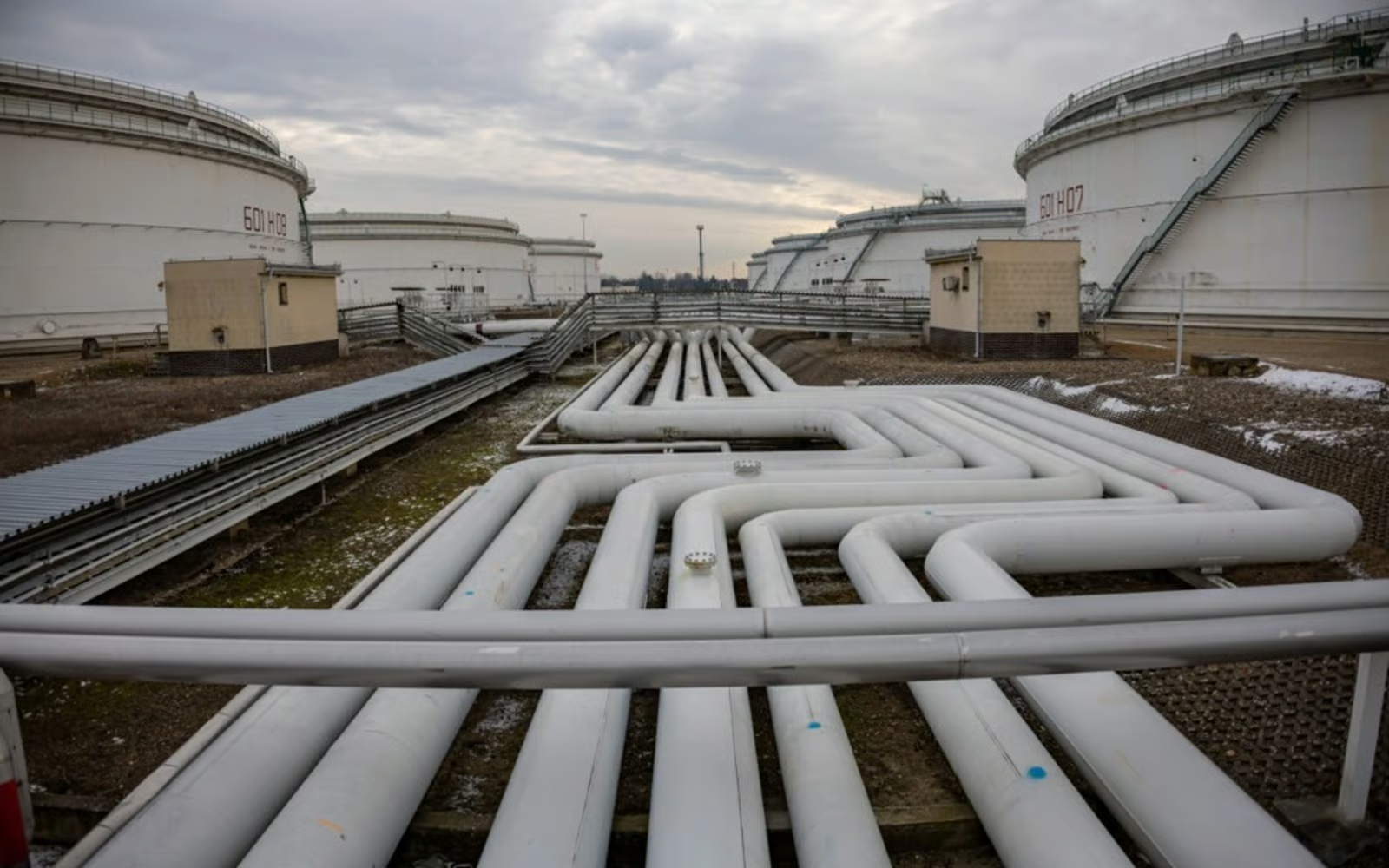
West African leaders have endorsed the long-awaited Nigeria-Morocco Gas Pipeline (NMGP), signing a landmark agreement during the 69th ECOWAS Summit in Freetown, Sierra Leone. The decision marks one of the biggest milestones yet for the multi-billion-dollar energy project, which is expected to boost regional energy security, expand electricity access and strengthen economic integration across West Africa.
The ambitious Nigeria-Morocco Gas Pipeline has received fresh political backing after ECOWAS Heads of State approved its construction during their summit in Sierra Leone.
The agreement signals a major step toward implementing one of Africa’s largest infrastructure projects, designed to transport Nigerian natural gas across the Atlantic coast to Morocco while supplying several West African countries along its route.
The proposed pipeline will stretch for approximately 6,000–6,800 kilometres, making it one of the world’s longest offshore gas pipelines.
Jointly developed by NNPC Limited and Morocco’s National Office of Hydrocarbons and Mines (ONHYM), the project will pass through 13 West African coastal countries before connecting with the Maghreb-Europe Gas Pipeline, creating a new route for African gas to European markets.
Regional leaders described the agreement as a major boost for West Africa’s long-term energy strategy.
Beyond gas exports, the pipeline is expected to improve access to cleaner energy, stimulate industrial growth, encourage cross-border investment and strengthen regional cooperation among participating countries. It is also projected to support electricity generation and economic development across the region.
The Nigeria-Morocco Gas Pipeline was first launched through cooperation between Nigeria and Morocco and has since progressed through feasibility studies, engineering design and negotiations with participating countries.
The latest ECOWAS endorsement represents another significant milestone as stakeholders move closer to full implementation of the project.
With ECOWAS leaders now formally backing the initiative, attention will shift to financing, construction timelines and implementation across participating countries. If completed as planned, the pipeline is expected to become one of Africa’s most transformative energy infrastructure projects.