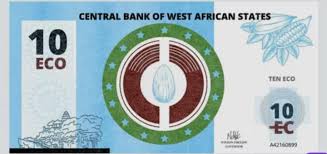
West African leaders say the long-delayed ECO currency remains on course for a 2027 rollout as the regional bloc seeks deeper economic integration, increased intra-African trade and stronger monetary cooperation.
The Economic Community of West African States (ECOWAS) has reaffirmed its commitment to introducing the long-awaited ECO single regional currency in 2027, describing the initiative as a significant milestone in its quest for deeper economic integration, stronger regional trade and sustainable economic growth across West Africa.
The renewed commitment follows a series of meetings involving ECOWAS finance ministers, central bank governors and monetary authorities, where member states reviewed progress on the roadmap towards establishing the common currency and the institutions required to support it.
ECOWAS says ECO remains a strategic priority
Regional officials said the ECO project is intended to facilitate trade among member states by reducing dependence on multiple national currencies, lowering transaction costs and promoting economic stability across the 15-member bloc.
According to ECOWAS, the currency is expected to strengthen the region’s common market by encouraging cross-border investments, improving price transparency and enhancing monetary cooperation among participating countries.
The single currency has been under discussion for more than two decades and has experienced several postponements due to macroeconomic challenges, political developments and member states’ inability to meet agreed convergence criteria.
Why the ECO has been delayed
The ECO was initially expected to be introduced several years ago but repeatedly missed its target dates as many member countries struggled to satisfy key economic benchmarks.
Among the requirements are limits on inflation, fiscal deficits, public debt and foreign reserve management designed to ensure participating economies can operate effectively under a shared monetary system.
Analysts have also cited political instability in parts of West Africa, differing economic structures and recent withdrawals of some Sahel countries from ECOWAS as additional challenges confronting regional integration efforts.
Launch target remains 2027
Despite those challenges, ECOWAS officials have maintained that preparations remain on track for a 2027 rollout, although some experts believe implementation may occur gradually rather than simultaneously across all member states.
Regional leaders have indicated that countries meeting the required convergence standards could form the initial phase of the monetary union, with others joining later after fulfilling the necessary conditions.
What it means for Nigeria
For Nigeria, West Africa’s largest economy, the proposed currency could simplify regional trade by eliminating exchange-rate costs with neighbouring countries and encouraging greater investment within the ECOWAS market.
However, economists note that adopting a common currency would also require member states to coordinate monetary and fiscal policies more closely, limiting the ability of individual central banks to independently manage interest rates and exchange rates.
They add that achieving sustained macroeconomic stability across participating countries remains essential for the long-term success of the ECO.
The ECO is the proposed common currency of ECOWAS, comprising 15 West African countries. The project forms part of the bloc’s broader objective of establishing a regional monetary union and eventually creating a single market capable of competing more effectively in the global economy.
While ECOWAS continues to target 2027 for the launch, the currency has not yet been introduced. The date remains the bloc’s official target, and implementation depends on member states meeting agreed economic and institutional requirements.