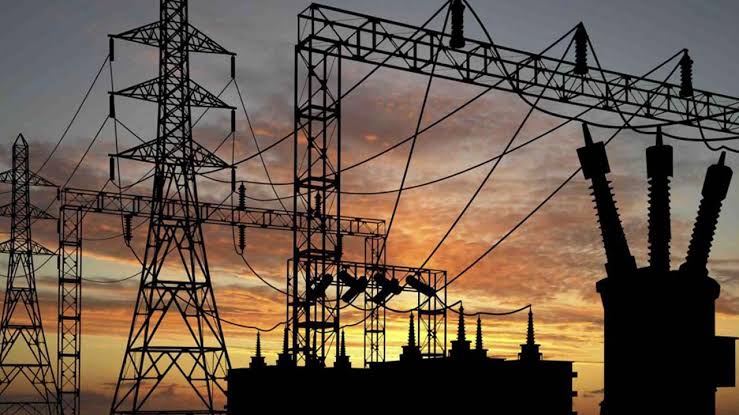
The Federal Government has unveiled plans to increase electricity access in Nigeria to more than 80 per cent within the next five years while working to significantly narrow the gap between installed generation capacity and the electricity actually available to consumers.
The proposed targets form part of broader efforts to address persistent problems in Nigeria’s power sector, particularly the inadequate supply of electricity to homes and businesses and the impact of unreliable power on manufacturing and industrial activity.
Nigeria has long struggled with a significant difference between its installed electricity generation capacity and the amount of power that can reliably reach consumers.
Government records have previously highlighted the scale of the problem. A Federal Ministry of Works account noted that Nigeria had more than 13,000MW of installed generation capacity at one point, while only about 4,000MW was reliably reaching consumers because of constraints across the generation, transmission and distribution chains.
Government targets wider electricity access
The new plan seeks to push electricity access above the 80 per cent threshold within five years.
The target is significant given the country’s existing access challenges and the government’s stated ambition to improve electricity supply for households and businesses.
Nigeria’s revised climate commitments have also included an ambition to achieve universal electricity access by 2030, underscoring the scale of the country’s longer-term energy objective.
The Federal Government’s latest approach, however, is not limited to connecting more Nigerians to electricity.
It also seeks to ensure that power generated by the country’s plants is actually transmitted and distributed to consumers.
Installed capacity remains different from available power
One of Nigeria’s longstanding electricity-sector problems is the difference between the amount of power plants are capable of generating and the electricity that can actually be supplied.
Gas shortages, transmission constraints, distribution bottlenecks and other technical and financial problems have repeatedly limited the amount of electricity available to consumers.
The government has previously acknowledged that despite substantial installed generation capacity, only a fraction reaches homes and businesses reliably.
Addressing that gap is therefore central to the latest plan.
Manufacturing bears the cost
The electricity challenge has particularly serious consequences for manufacturers.
Businesses that cannot depend on the national grid often have to rely on diesel and petrol generators, increasing production costs and reducing competitiveness.
The Federal Government has consequently linked improvements in electricity supply to broader efforts to strengthen Nigeria’s manufacturing sector and support economic growth.
The authorities are seeking to improve the entire electricity value chain rather than focusing exclusively on generation.
That means expanding and rehabilitating transmission infrastructure, improving distribution networks and addressing the gas supply constraints affecting thermal power plants.
Closing the generation gap
Under the proposed plan, the government wants to substantially reduce the difference between installed generation capacity and power that is actually available within three years.
The objective is to ensure that investments in generation translate into electricity that can be delivered to consumers.
Previous government interventions have already focused on improving payment assurance for generating companies and encouraging investment across the sector.
The Federal Ministry of Works has previously reported that power supply capacity improved from about 4,000MW to 7,000MW under earlier interventions, although significant transmission and distribution constraints remained.
The latest targets therefore represent an attempt to move beyond simply adding generation capacity and instead tackle the structural weaknesses that prevent available electricity from reaching Nigerian consumers.
If implemented successfully, the government expects the measures to improve electricity access, strengthen industrial production and reduce the burden of unreliable power on Nigerian businesses.