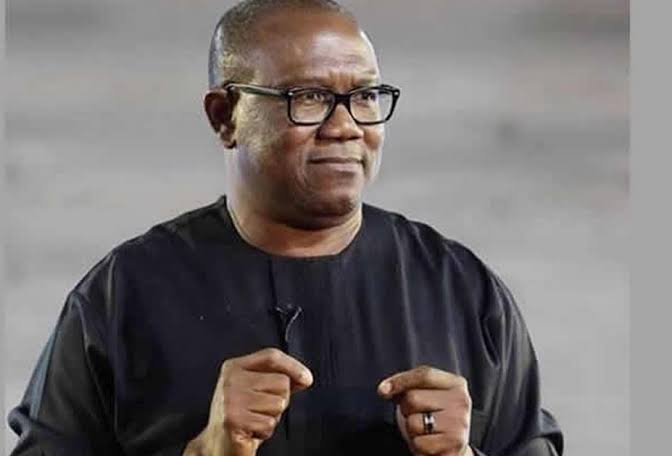
Former Labour Party presidential candidate Peter Obi has again maintained that he won Nigeria’s 2023 presidential election, even as he acknowledged during a BBC interview that he does not have evidence to prove the claim.
Obi made the remarks while responding to questions about his longstanding position that the 2023 election was rigged and his decision to continue discussing the future of Nigerian politics rather than revisiting the legal battle that followed the election.
Asked whether he had evidence to support his assertion that he won the election, Obi responded: “There’s no evidence. Everything is not based on evidence.”
He nevertheless stood by his position when pressed by the interviewer, saying: “I won the election and that’s where I will end.”
Obi’s comments are likely to attract renewed political attention because his 2023 candidacy transformed the Labour Party into a major electoral force and placed him at the centre of one of Nigeria’s most closely contested presidential elections in recent history.
The Independent National Electoral Commission declared Bola Ahmed Tinubu of the All Progressives Congress the winner of the February 25, 2023 presidential election, with Atiku Abubakar of the Peoples Democratic Party finishing second and Obi third.
Both Obi and Atiku challenged the result in court. Their petitions were dismissed by the Presidential Election Petition Court, while the Supreme Court subsequently upheld Tinubu’s victory.
Obi has continued to maintain that the election did not reflect what he believed to be the actual choice of Nigerian voters.
During the interview, however, his acknowledgement that he had no evidence to substantiate his claim introduced a notable distinction between his political conviction and the evidentiary standard applied in the courts.
The former Anambra State governor also rejected the suggestion that he should step aside in 2027 in favour of a consensus opposition candidate.
Rather than withdrawing from the contest, Obi argued that opposition forces should focus on mobilising voters and doing what he described as the right thing.
His position comes as political parties and opposition figures continue discussions over how best to challenge the APC in 2027.
Obi’s political movement remains particularly significant among younger voters and supporters who backed his 2023 campaign, although the structure and alliances that could shape his 2027 bid remain part of the broader political realignment underway.
The former presidential candidate has also continued to defend his positions on economic policy, including his stance on fuel subsidy and corruption, during the interview.
For Obi, the 2023 election remains an unresolved political question despite the conclusion of the judicial process. For Nigeria’s electoral system, however, the legal outcome remains that Tinubu was declared and judicially affirmed as the winner of that contest.
That contrast between political conviction and legally established electoral outcome is likely to remain part of the national debate as the country moves towards another presidential election in 2027.