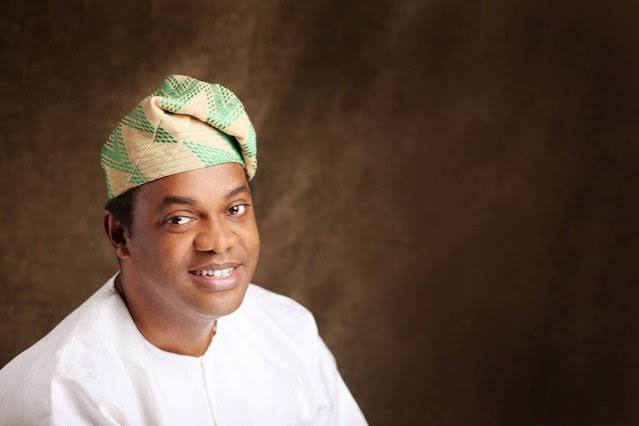
Former Cross River State Governor and Peoples Redemption Party (PRP) presidential candidate Donald Duke has criticised Nigeria’s foreign exchange policy, arguing that allowing the naira to fluctuate without first strengthening domestic industries is worsening the economic difficulties facing Nigerians.
Duke made the remarks on Tuesday during an interview with journalists in Abuja, where he outlined what he considers fundamental weaknesses in the country’s economic management, including excessive dependence on imports, rising fuel costs, high interest rates and government expenditure that does not sufficiently support local production.
The former governor argued that Nigeria must prioritise industrial development and domestic manufacturing if it hopes to achieve a more stable currency, reduce inflationary pressures and create sustainable employment.
Duke Questions Floating Exchange Rate Policy
Duke challenged the approach of allowing the naira’s value to be determined largely by market forces without first addressing the structural weaknesses of the Nigerian economy.
He argued that currency management should be linked to a broader economic strategy that establishes a sustainable exchange rate while strengthening the productive capacity of local businesses.
“No country floats its currency. The currency is your economic worth. It is like floating your value. As a human being, what is your worth? Are you going to float your worth? You manage your worth. You manage your currency,” he said.
Duke maintained that Nigeria should determine the exchange rate it considers appropriate and develop policies capable of supporting that objective.
He cited a hypothetical exchange rate of between ₦500 and ₦600 to the dollar, questioning how the country could achieve such a level without improving domestic production, exports and other sources of foreign exchange.
His argument was that currency stability cannot be achieved sustainably through exchange-rate management alone if the economy continues to rely heavily on imported goods.
Import Dependence and Local Manufacturing
Duke identified Nigeria’s dependence on foreign goods as a major source of pressure on the naira, noting that importers require foreign currency to purchase products that could potentially be manufactured locally.
He argued that encouraging domestic production would reduce demand for foreign exchange while creating jobs and retaining more economic value within the country.
According to him, government institutions should lead by example by increasing their patronage of locally manufactured goods rather than relying extensively on imported vehicles, equipment and other supplies.
He said a stronger domestic manufacturing base would help reduce pressure on the exchange rate while creating opportunities for Nigerian businesses and workers.
Duke also questioned the country’s approach to international trade, arguing that greater attention should be paid to the relationship between imports, exports and foreign investment.
He maintained that Nigeria would struggle to achieve lasting economic stability if it continued purchasing substantially more from other countries without developing sufficient productive capacity to compete in international markets.
Fuel Prices and Inflation
The PRP presidential candidate also identified rising fuel prices as a major contributor to Nigeria’s inflationary pressures.
He argued that higher transportation costs affect the movement of goods and services throughout the economy, eventually pushing up the prices paid by consumers.
Duke questioned the effectiveness of relying heavily on high interest rates to control inflation, suggesting that monetary policy should be better coordinated with government spending and measures designed to expand domestic production.
He argued that expensive borrowing makes it difficult for businesses to secure the capital required to establish factories, expand operations and increase output.
According to him, the cost of credit could undermine efforts to build the productive industries needed to reduce import dependence and strengthen the economy.
His position highlights a broader economic debate over how Nigeria should balance inflation control, exchange-rate flexibility, access to credit and industrial development.
Government Spending and Economic Priorities
Duke further criticised what he described as excessive government spending, arguing that public expenditure should contribute more directly to domestic production and employment.
He maintained that purchasing locally manufactured products would help reduce demand for foreign currency while supporting Nigerian industries.
He also expressed concern that political considerations sometimes influence government appointments at the expense of competence and effective governance.
According to Duke, the quality of leadership and the ability of public officials to develop and implement sound economic policies are essential to achieving meaningful national development.
He argued that Nigeria needs a coordinated approach involving fiscal policy, monetary policy, industrial development and trade management rather than isolated interventions.
A Continuing Debate Over Nigeria’s Economic Direction
Duke’s comments come amid continuing debate over the impact of Nigeria’s economic reforms, particularly the foreign exchange regime, petrol subsidy removal, inflation and the rising cost of living.
Supporters of exchange-rate flexibility generally argue that allowing the naira to reflect market conditions can reduce distortions, improve transparency and encourage foreign exchange inflows. Critics, however, contend that currency depreciation can increase the cost of imported goods, production inputs and essential commodities, particularly in an economy with limited domestic manufacturing capacity.
The effectiveness of any exchange-rate policy also depends on factors such as foreign exchange supply, productivity, investor confidence, export earnings and the country’s fiscal position.
Duke’s central argument is that Nigeria must strengthen its productive base if it hopes to reduce its dependence on imports and establish more sustainable economic stability.
His remarks add to the policy debate ahead of the 2027 general election, with economic management, inflation, employment and living standards expected to remain important issues for political parties and presidential aspirants.