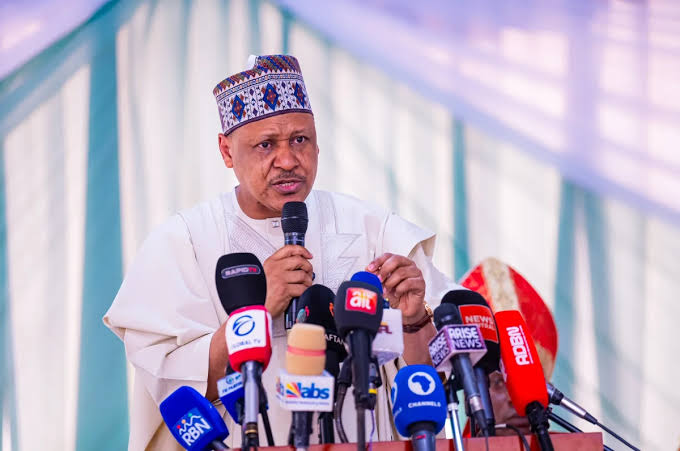
Minister of Information and National Orientation Mohammed Idris has urged religious leaders to avoid portraying Nigeria’s security challenges as a religious war, warning that such narratives could deepen divisions and undermine national unity.
Idris made the call in Abuja during the grand finale of the 2026 Synod of the Charismatic Bishops Conference of Nigeria and the International Communion of Charismatic Archbishops, Bishops and Apostles.
The minister said terrorism and criminality had affected Nigerians across religious and ethnic lines and should not be reduced to a conflict between Christians and Muslims.
He urged clerics to use their influence to promote peace, tolerance, responsible citizenship and national cohesion, particularly as political activity intensifies ahead of the 2027 general election.
Idris also reaffirmed the Federal Government’s commitment to protecting freedom of thought, conscience and religion as guaranteed by the Constitution.
He said religious leaders had the right to hold political opinions and support candidates of their choice but cautioned against allowing political competition to evolve into religious hostility.
The Federal Government has previously rejected claims that Nigeria’s security crisis amounts to a systematic religious war, arguing that terrorist and criminal groups have attacked people from different faiths and communities.
At the latest synod, Idris again said political disagreements should not be allowed to destroy Nigeria’s unity.
He urged Nigerians to assess political candidates based on their records and programmes and to accept legitimate electoral outcomes.
The minister also highlighted the role of religious organisations in youth empowerment, education, healthcare and humanitarian interventions.
His comments came as the 2027 political contest begins to assume a stronger religious and regional dimension, with politicians and interest groups increasingly mobilising supporters ahead of the election.
Idris’ warning underscores the government’s concern that political competition could amplify existing religious and ethnic tensions if not handled responsibly.
He called on religious leaders to help prevent misinformation, hate speech and inflammatory rhetoric from spreading through their congregations and social media networks.