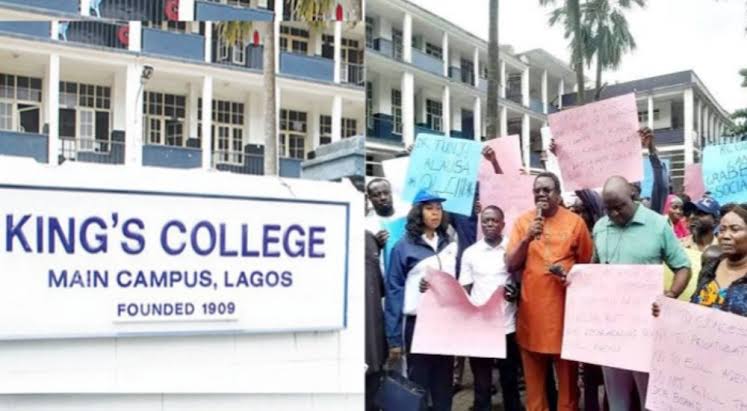
Workers in Nigeria’s federal education system have suspended the resumption of schools in protest against the Federal Government’s decision to concession King’s College, Lagos, to its old boys’ association.
The dispute has widened beyond the Lagos institution, with the Joint Congress of Unions of the Federal Ministry of Education directing that the new academic session should not commence across Federal Unity Colleges until further notice.
The unions issued the directive in a communiqué dated September 10, according to reports on the dispute. The suspension affected a resumption date scheduled for September 12 and covers more than 100 Federal Unity Colleges nationwide.
The unions’ position represents a significant escalation of opposition to the concession arrangement.
They have demanded that the Federal Government reverse the decision involving King’s College, insisting that public education institutions should not be subjected to arrangements that could undermine their public character.
Why workers are protesting
The education unions have accused the Minister of Education, Dr Tunji Alausa, of failing to meet with them despite repeated requests for dialogue.
They said the lack of engagement left them with little option but to take industrial action and mobilise parents and other stakeholders.
The unions also protested at the Federal Ministry of Education headquarters in Abuja, where they reportedly raised concerns about the concession of King’s College and other issues surrounding the management of public education.
Their broader argument is that education should remain a public responsibility and that government institutions should not be gradually transferred to private or semi-private management structures without sufficient consultation.
Government says King’s College remains public
The dispute has been complicated by differing descriptions of the arrangement.
The Federal Government has previously clarified that King’s College has not been sold and remains publicly owned, although a concession arrangement involving the school’s old boys’ association has been approved.
The government’s position is therefore that the arrangement does not amount to outright privatisation.
Supporters of the concession have framed it as a means of improving the institution’s infrastructure and management, while critics fear it could weaken public ownership and create a precedent for similar arrangements involving other federal schools.
The disagreement has now moved beyond questions about the future of King’s College to a wider debate about how Nigeria should finance, manage and modernise its public education system.
What happens next?
The Federal Government faces pressure to reopen discussions with the unions and clarify the terms of the concession.
The Education Rights Campaign has also called for the reversal of the arrangement and restoration of King’s College to full public ownership.
The Minister of Education has separately met with organised labour over the controversy and assured workers of job security, signalling an attempt to prevent the dispute from developing into a broader confrontation within the education sector.
The immediate challenge for the government is to balance its desire to improve the management and infrastructure of federal schools with concerns about transparency, public ownership, workers’ rights and stakeholder participation.
For parents and students, the uncertainty creates another disruption at the beginning of the academic year.
Unless the government and unions reach an agreement, the suspension of resumption could have wider consequences for the academic calendar across federal unity schools.