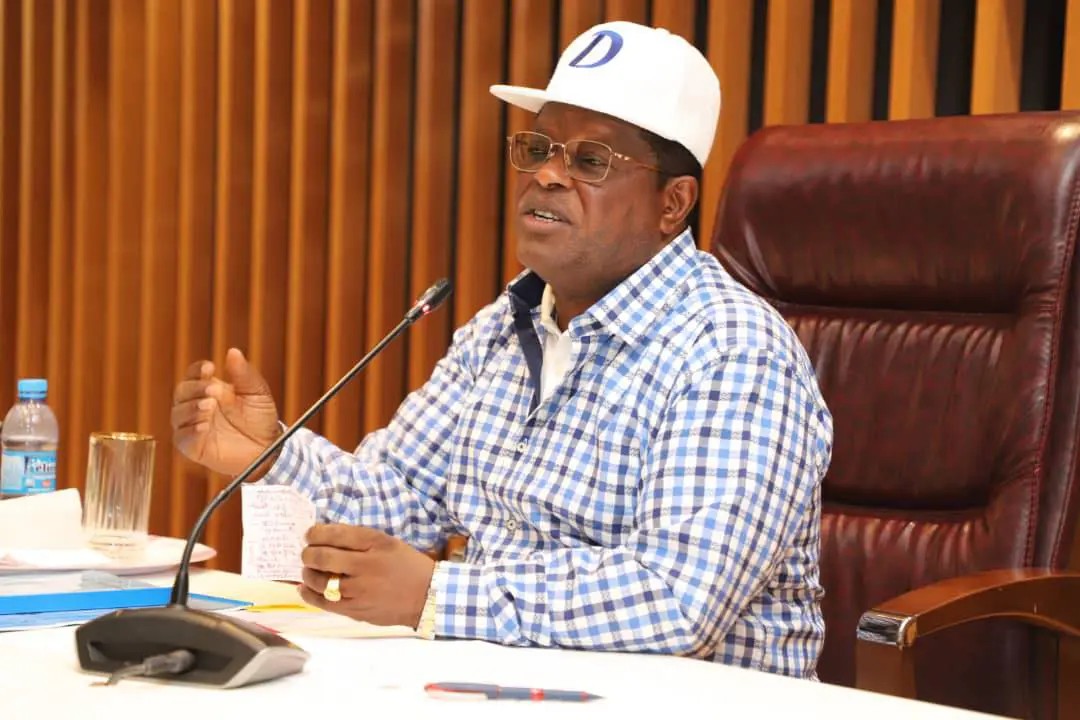
Minister of Works David Umahi has defended First Lady Oluremi Tinubu over the backlash trailing her recent remarks encouraging Nigerians to embrace vocational skills and small businesses, saying there is dignity in honest labour because his own mother sold akara while his father was a farmer.
Minister of Works David Umahi has thrown his weight behind First Lady Oluremi Tinubu following criticism over her comments encouraging young Nigerians to consider vocational trades and small-scale businesses. Drawing from his personal background, Umahi said his mother sold akara and his father was a farmer, insisting that the First Lady’s advice was sincere and should not be ridiculed.
Speaking at a public event, Umahi said Nigerians should stop making “a joke of every genuine advice,” arguing that not everyone can become a banker or pursue white-collar jobs.
According to him, every honest occupation contributes to national development, stressing that vocational work should be respected rather than looked down upon.
“My mother was selling akara. My father was a farmer… The First Lady’s advice is genuine. Everyone won’t be bankers,” Umahi said.
Umahi’s remarks come days after the First Lady’s comments encouraging youths to explore businesses such as selling akara, roasted corn and other small enterprises generated widespread reactions on social media.
While critics argued that government should focus more on creating quality jobs and improving the economy, supporters maintained that her message promoted entrepreneurship, self-reliance and the dignity of labour.
The minister urged Nigerians to embrace a stronger work ethic, saying national development requires citizens to engage in productive economic activities regardless of occupation.
He also argued that many successful individuals came from humble backgrounds and that parents’ occupations should never be a source of shame or ridicule.
Umahi’s intervention has added another voice to the national debate surrounding the First Lady’s remarks. As discussions continue, the controversy has evolved into a broader conversation about youth employment, entrepreneurship, economic opportunities and the role of government in addressing Nigeria’s unemployment challenges.