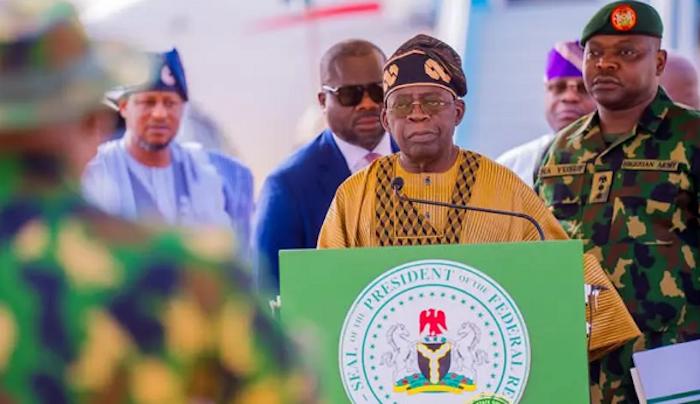
President Bola Ahmed Tinubu has reaffirmed his administration’s commitment to building what he described as a secure, stable and prosperous Nigeria, while emphasising the role of the military in safeguarding democratic governance and the country’s regional leadership.
Tinubu stated this on Saturday in Kaduna during the passing-out parade and commissioning ceremony for cadets of the Nigerian Defence Academy.
The President was represented at the ceremony by Speaker of the House of Representatives, Tajudeen Abbas.
Security Beyond Military Operations
According to the President, the government’s approach to national security extends beyond military operations to include job creation, macroeconomic stability, human-capital development and social protection.
He said these measures were necessary to complement security operations and address some of the underlying conditions that can contribute to instability.
“Despite the diverse challenges our dear country has been confronted with, my administration has remained steadfast, focused, and committed to building a secure, stable, and prosperous Nigeria,” Tinubu said in the address.
The President also highlighted Nigeria’s role within the Economic Community of West African States and other regional institutions, saying the country would continue to pursue diplomacy, security cooperation and economic integration.
Support for Democratic Governance
Tinubu reiterated the administration’s opposition to unconstitutional changes of government across the region.
At the same time, he said Nigeria would continue engaging with Mali, Niger and Burkina Faso despite the strains created by political developments in the Sahel.
He described the preservation of decades of regional integration, including free movement, trade and coordination, as important to collective security and prosperity.
The President also commended the military for its support for democratic governance and said Nigeria’s continental and regional leadership role would continue to be strengthened.
The remarks come as Nigeria continues to confront security challenges while balancing domestic economic reforms with its responsibilities within West Africa.