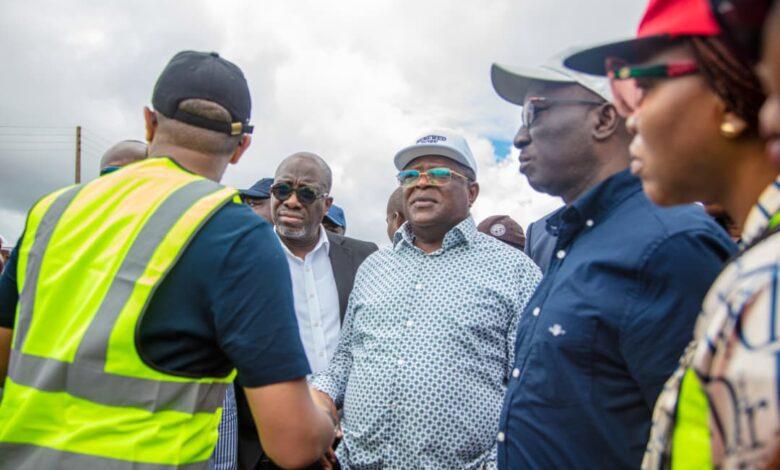
Minister of Works Dave Umahi has said the South-East will eventually have an opportunity to produce Nigeria’s president but argued that, in his view, the time has not yet come.
Umahi made the remarks on Thursday in Benin City while speaking at an event connected to the rehabilitation of the Benin-Asaba road.
His comments came amid an increasingly active debate among political actors in the South-East over the region’s presidential prospects ahead of the 2027 general election.
Umahi Challenges Comparisons With Obi
The minister also rejected suggestions that Peter Obi, the presidential candidate of the Nigeria Democratic Congress, was politically or personally superior to him.
Umahi argued that their backgrounds, intellectual capacity and records of public service could be compared, rather than assuming that Obi was automatically ahead of him.
The comments represent Umahi’s political assessment and should be understood within the broader debate over the South-East’s representation in national politics.
‘The South-East Will Have Its Opportunity’
Umahi maintained that the South-East would eventually have an opportunity to produce the country’s president.
However, he argued that the 2027 election should not necessarily be viewed as the region’s turn.
His position adds to an ongoing debate over informal political rotation, regional representation and the question of which geopolitical zone should produce the next president.
The 2027 Debate
The issue of regional representation has become increasingly prominent as politicians and political groups position themselves for the next presidential election.
Different political actors hold competing views on whether presidential succession should be determined by regional rotation, political alliances, party nominations or the preferences of voters.
Umahi’s remarks therefore form part of a wider political argument rather than an established constitutional rule governing presidential succession.
Under Nigeria’s constitutional framework, presidential candidates must meet the legal requirements for the office and win the election in accordance with the applicable electoral rules.
The ultimate decision on who occupies the presidency remains with Nigerian voters through the electoral process.