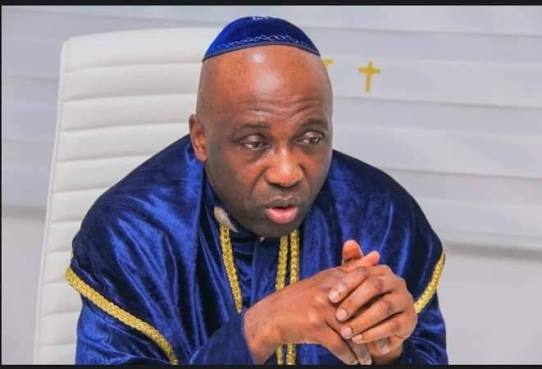
Primate Elijah Ayodele, leader of the INRI Evangelical Spiritual Church, has warned Nigerians and the Independent National Electoral Commission (INEC) over what he claims could be the emergence of fake polling units ahead of the 2027 general election.
Ayodele raised the alarm in a statement released on Sunday, warning that fraudulent polling locations and booths could be used to undermine votes during the election.
“For the upcoming election in Nigeria, I am seeing a lot of fake things regarding the election which the INEC must take seriously,” Ayodele said.
He alleged that fake polling units could be established across the country and equipped with materials designed to make them appear legitimate.
According to the cleric, such a development could be used to disenfranchise voters and manipulate election outcomes.
“I am seeing fake polling units and booths spread across the country to weaken the votes of some individuals and rig some people out,” he said.
Ayodele calls on INEC to act
Ayodele urged INEC to take the warning seriously and ensure that voters are adequately informed about the locations of legitimate polling units.
He warned that a failure to educate the electorate could create an opportunity for fraudulent electoral activities.
The cleric also questioned INEC’s level of preparedness for the 2027 election, describing the forthcoming contest as likely to be more challenging than previous elections.
He called on INEC Chairman Professor Joash Amupitan to strengthen the commission’s preparations and work towards delivering a credible election.
No evidence presented for alleged plot
Importantly, Ayodele’s warning is an allegation and prediction, not evidence that fake polling units have already been established.
There is currently no independent evidence in the reports reviewed confirming that a coordinated network of fake polling units is being deployed for the 2027 election.
PoshReporters therefore presents the claim as Ayodele’s warning rather than an established fact.
The warning nevertheless adds to growing political concerns about the credibility and security of the 2027 electoral process.