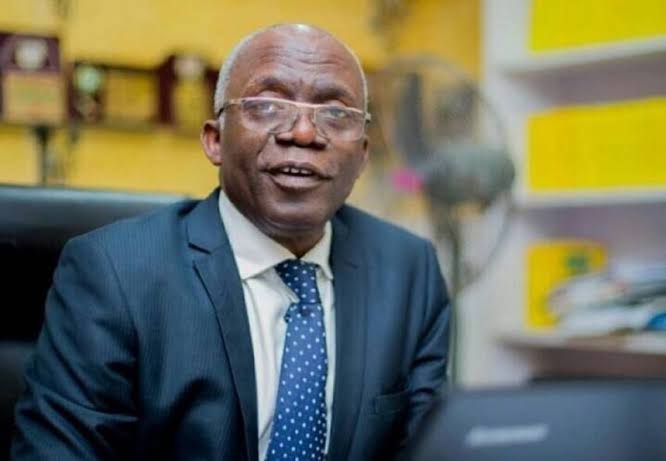
Human rights lawyer and Senior Advocate of Nigeria, Femi Falana, has filed a US$10 million damages suit against the Federal Government of Nigeria before the Community Court of Justice of the Economic Community of West African States (ECOWAS).
The case, numbered ECW/CCJ/APP/30/2026, was filed at the ECOWAS Court in Abuja.
Falana alleges that Nigerian authorities violated his fundamental rights during successive military administrations between the 1980s and 1990s through unlawful arrests and detention, restrictions on his movement and other actions he says violated his rights.
The claims are allegations contained in Falana’s application and have yet to be determined by the court.
Alleged Violations Spanning Several Years
In the case, Falana is asking the regional court to examine several incidents dating from his years as a human rights lawyer and activist.
Among the allegations are periods of detention, an alleged abduction in April 1990 and restrictions placed on his freedom of movement.
He also alleges that his movement to Zimbabwe was restricted in 1991 and that authorities seized his National Youth Service Corps certificate and international passport.
The application further references his arraignments before magistrates’ courts in Abuja in the early 1990s over allegations including conspiracy, treasonable felony, sedition and unlawful assembly.
Falana disputes the legality of those actions and is asking the ECOWAS Court to determine whether they violated rights protected under applicable regional and international human rights instruments.
$10m Compensation Sought
Beyond declarations concerning the alleged violations, Falana is asking the court to award him US$10 million in damages.
The compensation claim relates to alleged violations of rights including dignity, personal liberty, fair hearing, property and freedom of movement.
The suit names the Federal Government as the respondent.
The allegations concern events that occurred decades ago, meaning the court will also have to consider the legal basis for exercising jurisdiction over the claims and the applicable rules governing proceedings before the regional court.
ECOWAS Court’s Role
The Community Court of Justice is a regional judicial institution established under the ECOWAS framework.
Its human-rights jurisdiction allows individuals and groups in member states to bring certain complaints concerning alleged violations of rights recognised under applicable regional instruments.
Falana’s case therefore places historical allegations against Nigerian authorities before a regional judicial forum.
The filing does not amount to a judicial finding that the alleged violations occurred.
The Federal Government will have the opportunity to respond to the claims, after which the court will determine the issues presented before it.
Case Could Revive Debate Over Military-Era Rights Abuses
The lawsuit could also renew public discussion about human-rights violations during Nigeria’s successive military governments and the difficulties involved in addressing historical abuses through legal processes decades after the events occurred.
For Falana, the case represents an attempt to obtain judicial declarations and compensation for what he alleges were violations committed by Nigerian authorities.
For the Federal Government, the proceedings provide an opportunity to respond to the allegations through the judicial process.
The eventual determination will depend on the evidence and legal arguments presented before the ECOWAS Court.
Category: Judiciary, Human Rights, ECOWAS
Tags: Femi Falana, ECOWAS Court, Federal Government, Human Rights, Fundamental Rights, Military Rule, Nigeria Judiciary, Abuja, ECOWAS
- Presidency Rejects Obi’s Claim That Tinubu Has Abandoned Governance
POLITICS | PRESIDENCY | GOVERNANCE
Presidency Pushes Back Against Obi’s Tinubu Criticism, Says President Will Return This Week
The Presidency has rejected Peter Obi’s claim that President Bola Ahmed Tinubu has abandoned governance during his extended stay outside Nigeria, saying the President has remained engaged with government affairs and is expected to return to the country this week.
Bayo Onanuga, Special Adviser to the President on Information and Strategy, responded to Obi in a post on X amid renewed debate over Tinubu’s absence from the 81st United Nations General Assembly in New York.
Onanuga argued that the President does not have to be physically present in Abuja to perform his constitutional responsibilities in an era of digital communication.
Obi Questions Presidential Absence
Obi, the Nigeria Democratic Congress presidential candidate, had criticised Tinubu’s prolonged stay abroad and questioned his absence from the UN General Assembly.
The former Anambra governor argued that the President should be physically engaged with the country’s challenges rather than remaining abroad for an extended period.
The comments added to a wider public debate over the President’s travel schedule and Nigeria’s representation at major international diplomatic events.
Presidency Calls Trip a Working Vacation
Onanuga said Tinubu had been on a working vacation and remained entitled to take such leave.
He said the President had continued to work while abroad and remained in contact with developments in Nigeria.
The presidential spokesperson also said Tinubu was expected back in Nigeria this week.
The Presidency has maintained that Vice President Kashim Shettima represented Nigeria at the UN General Assembly and carried the President’s mandate during the international gathering.
Debate Over Presidential Presence
The disagreement raises two separate questions: whether a president can effectively discharge official duties while abroad and whether extended periods outside the country require additional public communication about official engagements.
The Presidency has emphasised the former, pointing to digital communications and continued direction of government business.
Critics have focused on the latter, particularly Tinubu’s absence from the annual UN gathering and the duration of his stay outside Nigeria.
The two positions represent different assessments of presidential visibility, international representation and public accountability.
Tinubu’s Expected Return
According to Onanuga, Tinubu is expected to return to Nigeria during the week of September 28.
The President’s return would bring the current period of political debate over his overseas stay into a new phase, with attention likely to shift to his domestic schedule and official engagements.
The Presidency’s position remains that Tinubu has continued to perform his duties throughout the trip.
Obi’s criticism represents the opposition candidate’s political assessment of the President’s absence.