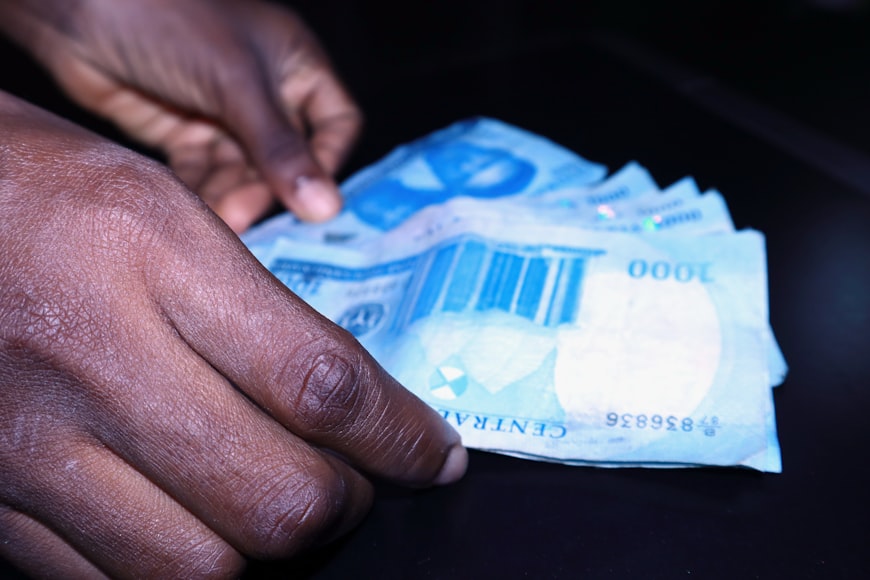
The Nigerian naira strengthened against the US dollar at the official foreign exchange market after the Central Bank of Nigeria injected $151 million into the market, increasing dollar liquidity and easing some pressure on the local currency.
The naira closed at approximately N1,328.22 per US dollar at the Nigerian Autonomous Foreign Exchange Market (NAFEM) on Thursday, September 10, compared with N1,329.22 the previous day — a gain of N1, or about 0.08 per cent.
The intervention came as activity in Nigeria’s foreign exchange market increased significantly.
CBN supplies $151 million
According to market data cited in recent reporting, the CBN sold $151 million at rates ranging from N1,322.71 to N1,331.50 per dollar.
The intervention followed renewed pressure on the naira amid increased demand for foreign currency.
The move highlights the central bank’s continuing role in managing liquidity and reducing excessive volatility in the foreign exchange market.
Nigeria’s external reserves were also reported at $54.283 billion, providing a larger buffer against external economic pressures.
Interbank turnover jumps
The intervention coincided with a sharp increase in interbank foreign exchange activity.
Turnover rose by 69.82 per cent to $94.43 million, compared with $55.60 million recorded in the previous trading session.
The number of deals also increased from 58 to 86, representing 28 additional transactions, or a 48.28 per cent increase.
The dollar traded between N1,321.50 and N1,334 during the session, with a weighted average rate of approximately N1,329.21.
The figures suggest broader participation in the interbank market, although interbank transactions represent only one part of total foreign exchange activity.
Gains extend beyond the dollar
The naira also appreciated against the pound sterling and euro during the session.
It strengthened by N3.93 against the pound, closing at N1,798.22 per pound, while it gained N7.28 against the euro, settling at N1,540.99 per euro.
However, the currency’s performance was not uniform across all segments.
At GTBank’s foreign exchange counter, the naira weakened by N10 to N1,340 per dollar.
At the parallel market, the dollar was reported at approximately N1,375, leaving a significant gap between the street and official-market rates.
What the intervention means
Foreign exchange liquidity is a major factor influencing the value of the naira.
When dollar supply is insufficient relative to demand, pressure can build on the domestic currency. Increased supply from the central bank can temporarily reduce that pressure and support market stability.
But sustained exchange-rate stability depends on broader economic fundamentals, including foreign investment flows, oil revenues, export earnings, inflation, interest rates and demand for foreign currency.
The latest movement therefore represents a positive short-term development for the naira, but it does not by itself establish a permanent reversal in the currency’s fortunes.
Broader economic implications
A more stable naira can potentially reduce uncertainty for businesses that depend on imported inputs, foreign equipment and international payments.
It can also affect the cost of imported goods and services, although the effect on consumer prices depends on how long the exchange-rate improvement lasts and how quickly changes are transmitted through supply chains.
For policymakers, maintaining adequate foreign exchange liquidity while strengthening the country’s underlying sources of dollar earnings remains a key challenge.
The latest CBN intervention demonstrates that the central bank remains willing to act when market conditions require additional liquidity.
Whether the improvement will be sustained will depend on developments across the foreign exchange market and the wider Nigerian economy.