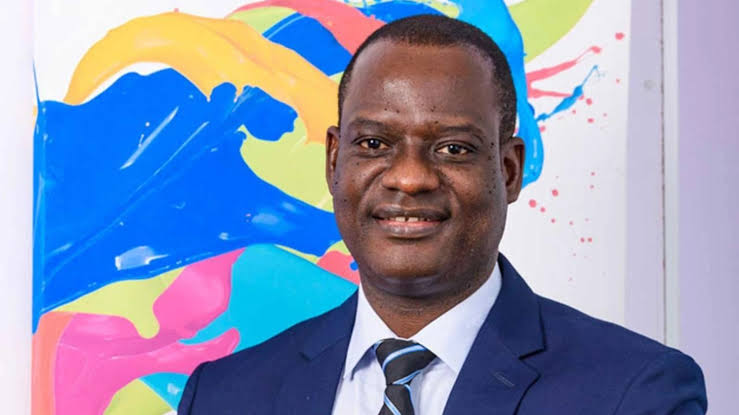
Nigeria’s Minister of Finance and Coordinating Minister of the Economy, Taiwo Oyedele, has explained how the Federal Government is utilising savings generated from the removal of fuel and foreign exchange subsidies, saying the funds have been channelled into debt servicing, the new national minimum wage, student loans and other key government obligations.
Speaking at the 7th Africa Emerging Markets Forum in Abuja on Thursday, Oyedele said Nigerians deserved greater transparency on the use of subsidy savings and disclosed that the government would soon publish a detailed breakdown of how the funds have been spent.
Debt Servicing, Minimum Wage Among Top Priorities
According to Oyedele, part of the savings has been used to:
- Offset the Federal Government’s Ways and Means obligations.
- Service rising public debt amid higher interest rates.
- Fund the implementation of the ₦70,000 national minimum wage.
- Support the Nigerian Education Loan Fund (NELFUND).
- Meet other critical government financial commitments.
He explained that after the government stopped financing expenditure through money creation, those obligations still had to be funded through conventional means.
“If you stop printing money, the spending doesn’t disappear. You need to finance the money you were printing before,” Oyedele said.
FG Promises Detailed Report
Acknowledging public concerns about the subsidy savings, Oyedele described the questions as legitimate and said the government had a responsibility to account for how the funds were being utilised.
He noted that the combined cost of fuel and foreign exchange subsidies previously amounted to about five per cent of Nigeria’s Gross Domestic Product (GDP).
According to him, a comprehensive report detailing the total savings and expenditure will be released in the coming days as part of the administration’s transparency efforts.
Student Loans and Workers’ Welfare
Oyedele said subsidy savings have also supported the NELFUND programme, through which more than 1.5 million students have received tuition support and monthly upkeep allowances.
He added that the increase in the national minimum wage from ₦30,000 to ₦70,000 significantly raised the government’s wage bill, making the subsidy savings an important source of funding for the new salary structure.
Why FG Is Still Borrowing
Responding to questions about continued government borrowing, Oyedele explained that exceeding revenue targets does not eliminate the need for borrowing where total expenditure still exceeds revenue.
He maintained that borrowing remains appropriate provided the funds are invested in projects that generate greater value than their cost.