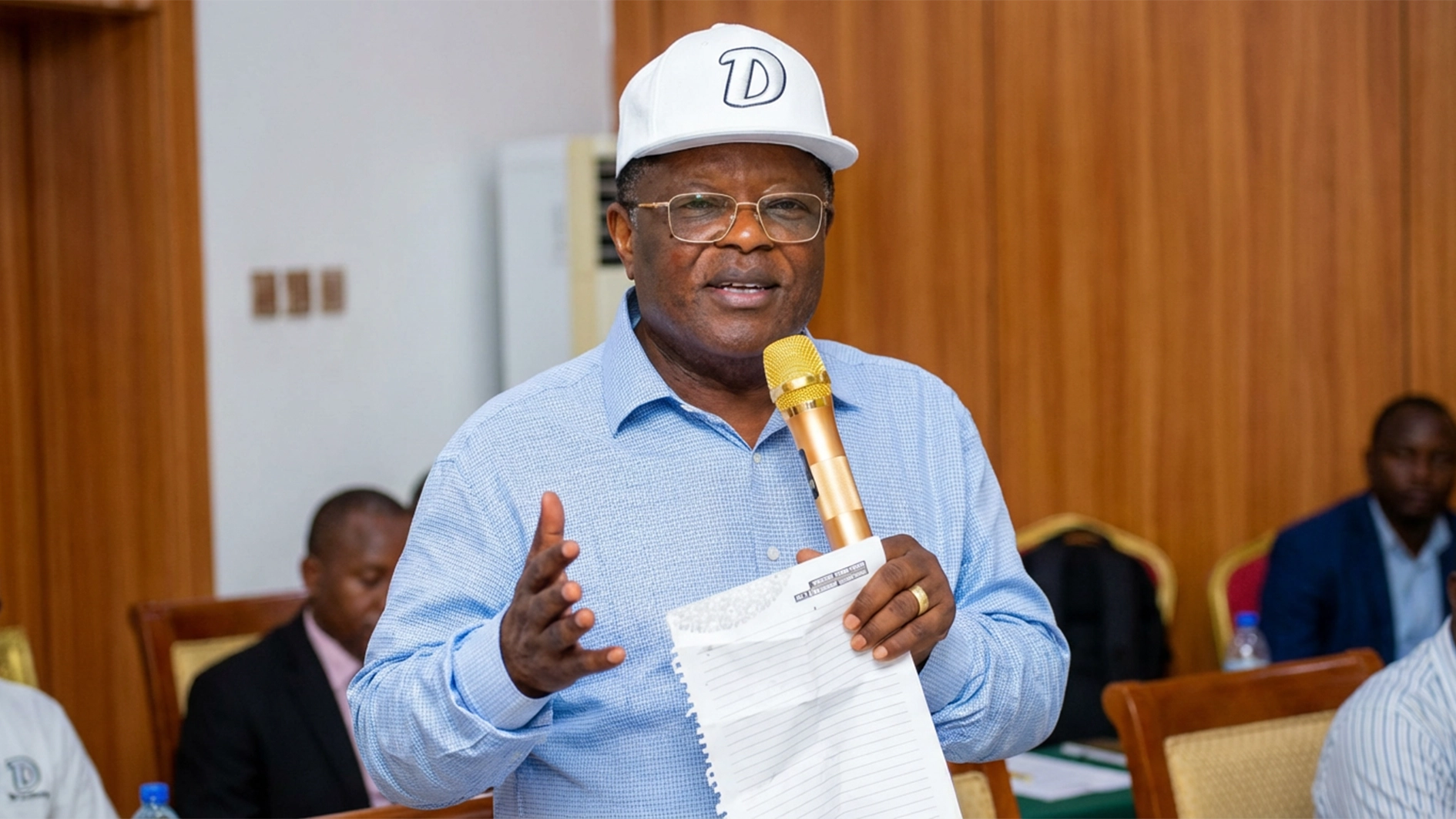
Minister of Works David Umahi has released fresh details surrounding the death of Mary Habila, the 26-year-old health worker who died at his staff quarters in Uburu, Ebonyi State, maintaining that she had complained of illness before her death and insisting that a forensic autopsy remains the best way to determine the actual cause of death. His comments come amid mounting public scrutiny and an ongoing police investigation.Minister of Works David Umahi has released fresh details surrounding the death of Mary Habila, the 26-year-old health worker who died at his staff quarters in Uburu, Ebonyi State, maintaining that she had complained of illness before her death and insisting that a forensic autopsy remains the best way to determine the actual cause of death. His comments come amid mounting public scrutiny and an ongoing police investigation.
Nigeria’s Minister of Works, David Umahi, has again addressed the circumstances surrounding the controversial death of Mary Habila, offering additional details as investigations into the incident continue.
The minister said the deceased had shown signs of ill health before she was found unconscious at the staff accommodation within his country home in Uburu, Ohaozara Local Government Area of Ebonyi State, stressing that speculation should give way to scientific findings from a forensic examination.
According to Umahi, Habila had complained of feeling unwell before the incident.
He stated that she reportedly mentioned experiencing nose bleeding and was not in her usual state of health before she later became unresponsive. The minister maintained that there was no attempt to conceal the incident and that emergency efforts were made once her condition was discovered.
Fresh information has also emerged from a sworn affidavit filed by Anita Baaki, a colleague of the deceased.
Baaki said she and Habila travelled to Ebonyi on official assignment alongside other ministry staff and were accommodated in adjoining rooms within a staff chalet. She recalled that Habila visited her room on the evening before her death after having her hair done and later returned to her own room.
When repeated efforts to reach her proved unsuccessful, staff members forced the room open and found her lying unconscious near the entrance before rushing her to the David Umahi Federal University Teaching Hospital, where doctors confirmed she was dead on arrival.
Umahi reiterated that he personally requested a forensic autopsy, insisting that only medical experts—not speculation on social media—can establish the true cause of Habila’s death.
He urged the public to allow investigators to complete their work, saying premature conclusions could undermine both the investigation and the dignity of the deceased’s family.
The Ebonyi State Police Command has continued its investigation into the circumstances surrounding the death.
Separately, the Ebonyi State Ministry of Justice has reportedly recommended that a post-mortem examination be carried out before any final legal conclusions are reached, while the deceased’s body remains central to ongoing forensic inquiries.
The case has attracted widespread national attention following conflicting accounts and intense public debate online.
Civil society groups, legal observers and members of the public have continued to call for a transparent investigation capable of addressing lingering questions surrounding the circumstances of Habila’s death.
Authorities have not announced any criminal findings, and investigators have yet to release the results of any forensic examination.
As investigations continue, the focus remains on the outcome of the autopsy and police findings. Umahi insists the truth will emerge through scientific evidence, while the public awaits official conclusions that could clarify one of the country’s most closely watched investigations in recent weeks.