Former President Olusegun Obasanjo has warned that many of the conditions that led to Nigeria’s 1967 civil war still exist today, urging Nigerians to learn from history and ensure the country never experiences another internal conflict.
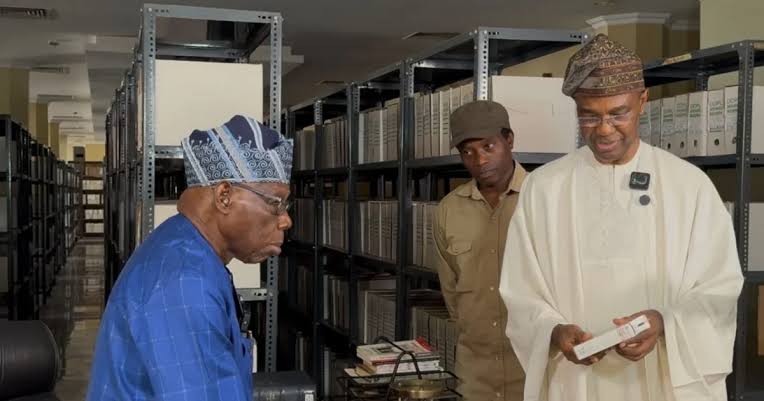
Former President Olusegun Obasanjo has expressed concern that several of the underlying issues that triggered the Nigerian Civil War have not been fully addressed, cautioning that the country must make deliberate efforts to prevent a recurrence. He made the remarks while receiving historical documents and eyewitness accounts of the Asaba Massacre at the Olusegun Obasanjo Presidential Library in Abeokuta, Ogun State.
Obasanjo said understanding the events surrounding the civil war is essential to promoting reconciliation and preventing future conflict.
According to him, Nigeria has already paid a heavy price through the 1967–1970 civil war, stressing that the country “cannot afford a second civil war.” He urged Nigerians to study the nation’s history, condemn the mistakes of the past and work collectively toward lasting peace and national unity.
The former president made the comments during the presentation of research materials documenting the Asaba Massacre, one of the tragic incidents associated with the Nigerian Civil War.
Obasanjo, who served as a military commander during the conflict, acknowledged his participation in the war but explained that operations in the Asaba area were under the command of the late Head of State, General Murtala Mohammed. He maintained that preserving historical records is vital to national healing and education.
Obasanjo called on Nigerians to embrace the principle of “Never Again,” insisting that every effort should be made to prevent another civil war.
He also pledged to study the historical materials presented to him, describing documentation of the country’s past as an important step toward strengthening national unity and preventing future divisions.
The former president’s remarks come amid renewed conversations about national unity, security and governance. He urged leaders and citizens alike to confront unresolved issues through dialogue, justice and inclusive nation-building rather than allowing old divisions to resurface.